

Why Poland’s Family Foundations Are Turning Heads in International Tax Circles
Warsaw’s answer to Swiss trusts offers something the rest of Europe can’t: freedom from CFC rules. When Poland introduced family foundations in 2023, few outside Warsaw’s financial district paid attention. Two years later, tax advisors from London to Luxembourg are studying these structures with intense interest. The reason? Poland has created something that shouldn’t exist in today’s world of coordinated tax enforcement: a legitimate way to hold foreign companies without triggering controlled foreign corporation (CFC) rules.
The Global Context
First, some background for readers unfamiliar with CFC rules. Most developed countries tax their residents on profits earned by foreign companies they control, even if those profits aren’t distributed. If you’re a German resident who owns a Bermuda company, Germany will tax you on that company’s profits. The same applies whether you’re in France, the UK, or the United States.
These rules exist for good reason. Without them, anyone could set up a company in a low-tax jurisdiction and accumulate profits indefinitely, paying tax only when (if ever) they brought the money home. The CFC regime closes this loophole by “looking through” the foreign company and taxing its controller directly.
Enter the Polish family foundation – a structure that, according to Poland’s tax authorities, breaks this chain of attribution entirely.
How the Polish Structure Works
Here’s the mechanism in simple terms. When a Polish resident transfers shares in a foreign company to a Polish family foundation, the foundation, not the individual, becomes the shareholder. The individual becomes a beneficiary of the foundation but no longer “controls” the foreign company under Polish CFC definitions.
More importantly, the foundation itself is exempt from Polish corporate income tax under Article 6(1)(25) of the tax code, including Polish CFC regulations. This isn’t a loophole or an oversight – it’s explicit in the law. The Polish tax authorities have confirmed this interpretation in multiple rulings throughout 2024 and 2025, most recently in April 2025 (ruling 0111-KDIB1-2.4010.151.2025.2.AK).
The result? A foreign company owned by a Polish family foundation can accumulate profits without Polish corporate income tax, including dividends from no-tax or low-tax jurisdictions, and no CFC rules apply to holding controlling interests in such subsidiaries in no-tax or low-tax jurisdictions. The beneficiaries pay tax only when they receive distributions from the foundation – and even then, at favorable rates.
The Tax Architecture
The elegance of the structure lies in its simplicity. When assets enter the foundation, there’s no tax event. The foundation’s income from its permitted activities flows tax-free. Only when money leaves the foundation to beneficiaries does the Polish tax system take its cut – a flat 15% on distributions. Should the foundation stray beyond its permitted scope into active business operations, those activities face a punitive 25% rate, ensuring the structure remains focused on wealth preservation rather than commercial enterprise.
Why This Matters Beyond Poland
For international families, this creates planning opportunities that have largely disappeared elsewhere in Europe. Consider a Brazilian family with businesses across Latin America, looking for a European base. Or Asian entrepreneurs seeking to consolidate their holdings before passing them to the next generation. Poland’s family foundation offers something offshore trusts and Luxembourg’s private wealth structures no longer can: genuine tax deferral on foreign profits.
Nevertheless, it is necessary to keep in mind that this structure works only if the beneficiaries are or become Polish tax residents. For non-Polish residents, the situation becomes more complex. Their home country’s CFC rules might look through the Polish family foundation and tax them directly. A German resident who is a beneficiary of a Polish family foundation might still face German CFC taxation. Each country takes its own view of foreign structures, and many tax authorities won’t respect the Polish foundation’s separate legal personality for CFC purposes.
This explains why the structure appeals primarily to those willing to establish Polish tax residency or to Polish families with international investments, rather than as a universal solution for international families.
The numbers tell the story. Since the law took effect, over 1,000 family foundations have been established in Poland. While official statistics don’t break down the origin of assets, Warsaw law firms report significant interest from non-Polish families, particularly those with existing European connections.
The Controversy
Not everyone is pleased. Poland’s Ministry of Finance announced in August 2024 that it was reviewing the CFC exemption. The concern is obvious: if Poland becomes known as the European jurisdiction where CFC rules don’t apply, it risks diplomatic pressure from neighboring countries and the OECD.
The proposed changes have sparked fierce debate. Polish business groups argue that family foundations were designed to help domestic entrepreneurs preserve family businesses, not to facilitate international tax planning. Removing the CFC exemption would gut the structure’s appeal, they claim.
The Current Standoff
As of June 2025, nothing has changed. Draft legislation (UD116) sits on the government’s agenda, scheduled for consideration. But insiders suggest the government is wavering. Poland wants to attract international investment and establish Warsaw as a financial center. Killing the family foundation’s tax advantages would send the wrong signal.
The international context adds complexity. The EU’s ATAD III directive targeting shell companies remains stalled – unanimous agreement among member states has proven elusive, with implementation now uncertain despite years of negotiation. This regulatory vacuum gives Poland breathing room to maintain its current framework.
The Bigger Picture
Poland’s family foundation debate reflects a larger tension in international tax policy. As governments coordinate to close loopholes, they also compete to attract investment and wealthy residents. What one country calls harmful tax competition, another calls economic development policy.
For families with international assets, the lesson is clear: tax planning opportunities still exist, but they require careful navigation of an increasingly complex landscape. Poland’s family foundations offer advantages today that may not exist tomorrow. Whether that window remains open depends on political calculations in Warsaw – and pressure from Brussels, Paris, and Berlin.
Thirty-five years after escaping Soviet control, Poland has created a capitalist tax planning tool that would make Swiss bankers envious. Whether it survives the next phase of global tax coordination remains to be seen. For now, at least, Poland offers something genuinely unique in European tax planning – and the world is paying attention.
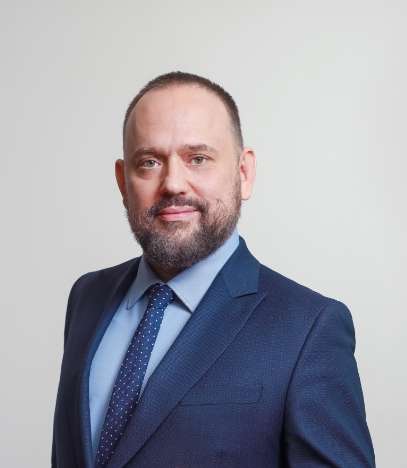
Robert Nogacki is a Polish attorney at law (radca prawny), the founder and managing partner of Kancelaria Prawna Skarbiec (Skarbiec Law Firm), which has operated continuously since 2006.
The law is equal for everyone, but the parties rarely are: on one side stands an organization with time, money, and lawyers, on the other a person with one business, one nest egg, and one life.
Clients rarely come to him with a legal problem. They come with a problem that also has a legal side: an audit that began with a single invoice, money entrusted to someone who has disappeared, a company that has to be passed on before it is too late. Most such matters are decided long before the first letter is written, in decisions made without asking and in deadlines nobody remembered. So he begins by asking how the client got here, not what the client should have done.
He advises entrepreneurs and families from more than a dozen countries, including those whose accounts the tax office has just seized and who do not know what to do tomorrow morning. He defends them in tax audits, customs and fiscal inspections, disputes with the tax authorities, and criminal tax proceedings. He represents victims of investment fraud and Ponzi schemes. He helps families set up family foundations and plan succession, so that a life’s work outlasts a single generation.
Not every case can be won. Every case can be run so that the client knows where they stand. Since 2006 he has represented the victims in the WGI case (Warszawska Grupa Inwestycyjna, the Warsaw Investment Group), one of the longest criminal cases in the history of the Polish financial market, because some things must not be left half finished, even when they take two decades. In the case of the collapsed cryptocurrency exchange Zonda (Zondacrypto, operated by BB Trade Estonia OÜ), he represents several hundred victims in the criminal investigation conducted by Poland’s National Prosecutor’s Office and in the Estonian bankruptcy proceedings.
Kancelaria Prawna Skarbiec is listed in the rankings of Poland’s largest tax advisory firms published by Dziennik Gazeta Prawna and Rzeczpospolita, and it is a four-time recipient (2015 to 2018) of the European Medal awarded by the Business Centre Club and the European Economic and Social Committee. Robert Nogacki publishes regularly, in the press and on the firm’s website, for people who have a problem rather than a law degree, because a legal opinion the client cannot understand protects only the lawyer.
He believes that the best legal advice is the kind that means the client never has to appear in court.